
Canadian R&D
Tax Credit Expertise.
Modern technology. Human accountability.

Action Berry helps Canadian businesses access Research and Development tax credits, including programmes such as SR&ED. We work with you from initial strategy and claim preparation through any reviews, objections and appeals - applying experienced judgement to identify your full entitlement and build a clear, evidence-based claim you understand and can confidently stand behind.
How We Help
Planning or preparing a claim
1
Whether you are planning ahead or approaching a filing deadline, we help you identify R&D activities eligible for tax credits, gather supporting evidence and prepare your claim. We check that the expenditure included in your claim corresponds to the R&D activities described, explain the positions being taken and address gaps before filing.
We work through the reviewing authority’s questions with you, examine the technical and financial issues, and prepare the response with supporting evidence. We explain where your claim stands and address disagreements directly. If issues remain unresolved, we advise on the next steps and carry the work through objections and appeals where needed.
2
Review process
Seeking a second opinion
3
Get an independent assessment of a proposed claim, advice you have received or a position taken during a review. We examine the technical work, expenditure records and supporting evidence, then explain where we agree, where we differ and why. You can use that assessment to decide whether to proceed, strengthen the case or change direction.
Supporting a client
4
We work alongside tax professionals, lawyers and other professional service providers to support R&D tax credit claims, reviews, objections and appeals. At the outset, we talk through who will do what and how we’ll keep each other informed, so you can bring specialist R&D tax credit expertise into your existing client relationship.
Who You Will Work With

Action Berry was founded by Simon Berry, who has spent nearly 30 years helping Canadian claimants of all sizes prepare and defend R&D tax credit claims.
That experience informs our team’s approach to examining the work, assessing the evidence and explaining the available choices. At the outset of an engagement, we establish who will be involved, what each person will do and how we will keep you informed.
Our Approach
Advice that fits how you work.
Some clients want to work through every technical detail. Others want us to get on with the claim and bring them the questions and decisions that need their attention. We find a way of working that fits your team and makes good use of your time.
Our team is responsible for understanding your activities, assessing their eligibility and the supporting evidence, and preparing claims we can explain and defend. We invest in established professional software, develop our own tools to make the work more efficient, and keep our skills current through ongoing training. Together, these investments support the attention to detail and judgement each claim requires.
Throughout the engagement, we explain where things stand, what we recommend and why. When the evidence raises a difficult question, we work through it with you.
Your Sector
-
We bring current software development knowledge to claims involving AI, performance, scale, reliability, system uncertainty and more. We examine what was uncertain, what you tried and what you learned. No perfect filing system needed to start: we work with your records to identify supporting evidence and gaps.
-
Work in this field can include biological research, diagnostics, medical devices and experimental methods. The R&D may form part of a wider product development or regulatory programme. We help identify the work relevant to the claim and explain its scientific and technical basis.
-
Development work can involve products, machinery, production processes, materials or scale-up. Technical challenges often cross these boundaries. We help explain the experimental work within the wider engineering effort, distinguishing it from routine production and troubleshooting.
-
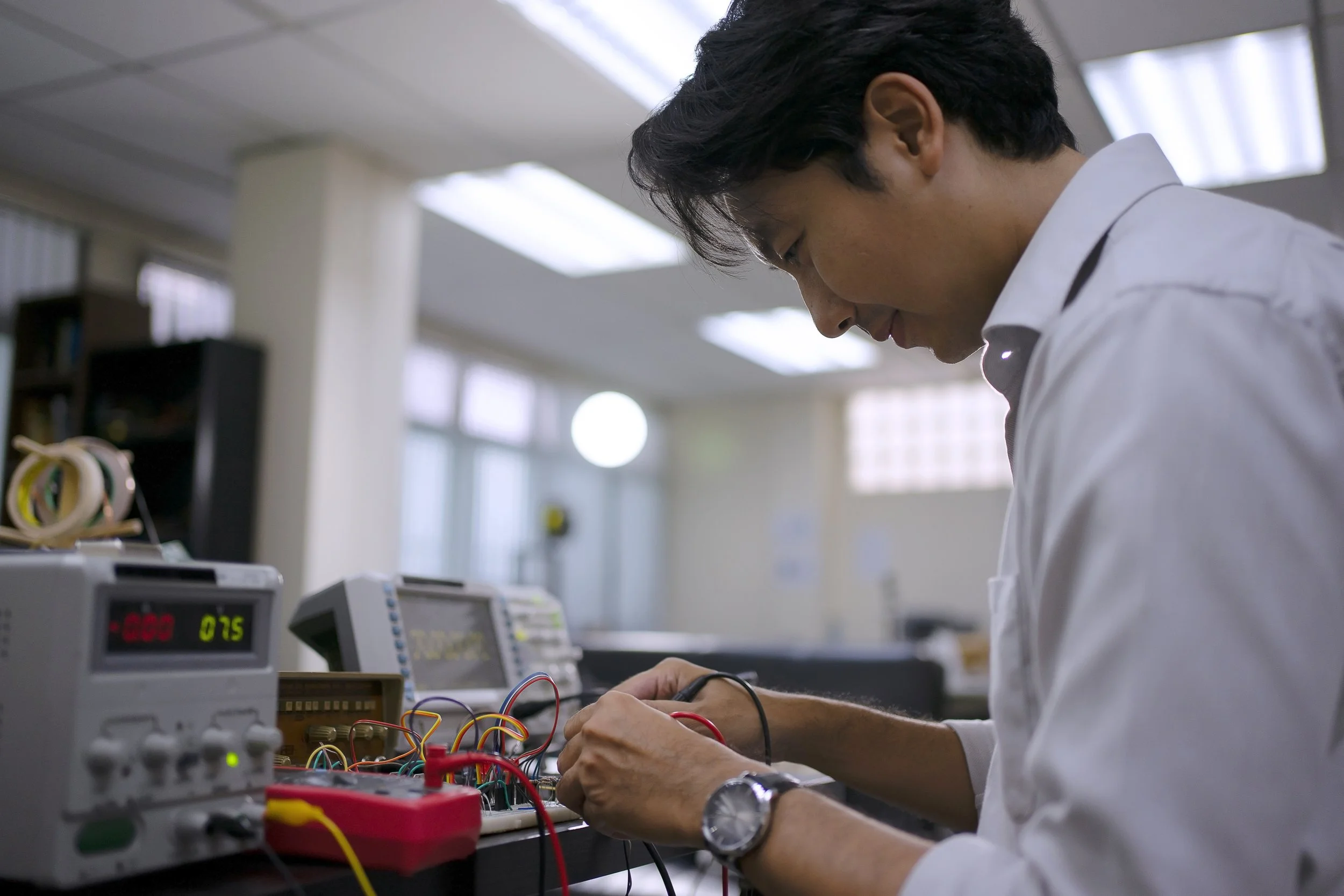
Work can range from individual components and circuits to embedded software and complete electrical systems. Technical questions may concern performance, reliability, power management, signal behaviour or interactions between different parts. We bring that wider technical context to preparing and defending your claim.
-
Research can involve new formulations, material properties, chemical reactions or processing methods. Composition, stability and operating conditions may interact in unexpected ways. We help explain the questions investigated and what the experimental work revealed about the material or process.
-
R&D can arise in cultivation, biological systems, production methods, food processing and preservation. Variable conditions can make the work difficult to assess and explain. We help identify the experimental development within the practical demands of growing, producing and processing.
If you don’t see your field, or your work crosses several, let us know! We love a challenge so tell us about your work. →
Modern technology.
Human accountability.

MAKE THE TECHNICAL RECORD USEFUL
A technical record is most useful when it explains the question being investigated, what was tried, the results and the conclusions. Keep the links between those records and the people, dates and work involved. An unsuccessful experiment can still contribute to that explanation.
READ REVIEW REQUESTS CLOSELY
Before preparing a response, identify
the specific review questions being asked, the records requested and the response date. Gather the relevant correspondence and supporting material so that the response can address the issues clearly. If a request is unclear, seek clarification early.
HOW IS YOUR INFORMATION HANDLED?
Before sharing confidential records with a provider, ask where the information will be stored and processed, who can access it, whether it may be used to train models and how long it will be retained. Clarify who reviews the resulting analysis and takes responsibility for the advice.
A good first conversation makes the next decision much clearer.
Tell us a little about your situation and what you need help with, including any approaching deadline. You may be planning a claim, responding to a review or looking for another perspective. We can use that first conversation to understand the situation and consider the next step.
Please keep confidential details for a later exchange using an agreed method.